The Best Deer Chili Ever!

Once you try deer chili, you will want seconds! Many hunters (and their friends and family) have freezers stocked with venison from autumn hunting ScreenHunter_223 Dec. 16 16.40expeditions. If venison is not available, substitute ground sirloin. Garnish with reduced-fat sour cream and/or reduced-fat shredded cheddar, if desired. You can make the chili a day ahead and refrigerate; reheat in the microwave or on the stovetop. 
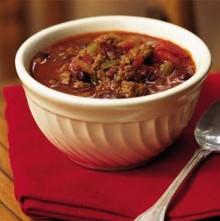
Ingredients

  •  1 pound ground venison
  • 1 cup chopped sweet onion
  • 1 cup chopped green bell pepper
  • 4 garlic cloves, minced
  • 1 jalapeño pepper, seeded and chopped
  • 2 tablespoons chili powder
  • 1/2 teaspoon salt
  • 1/2 teaspoon ground cumin
  • 1/2 teaspoon ground red pepper
  • 1/2 teaspoon freshly ground black pepper
  • 1 (14.5-ounce) can diced tomatoes, undrained
  • 1 (14-ounce) can fat-free, less-sodium chicken broth
  • 1 tablespoon tomato paste
  • 1 (15-ounce) can red kidney beans, rinsed and drained

Preparation

IMG_1161

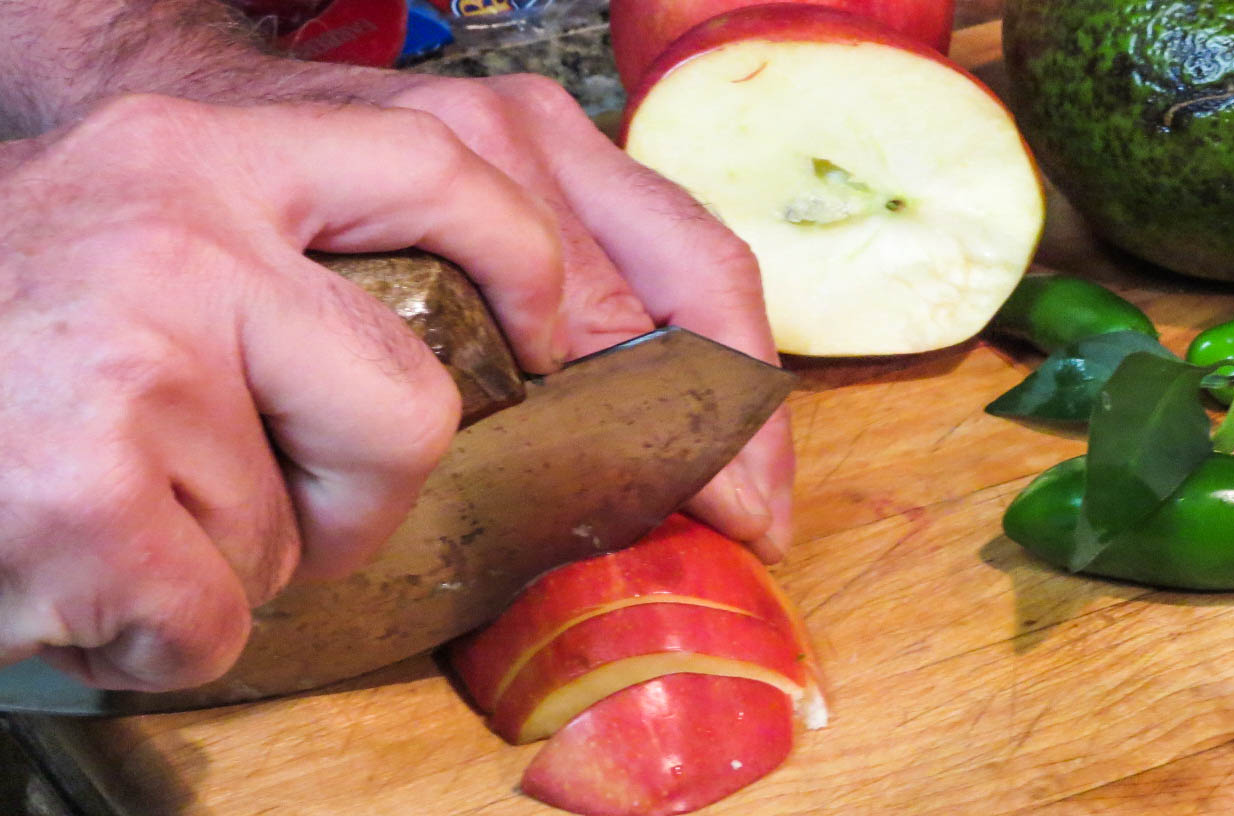
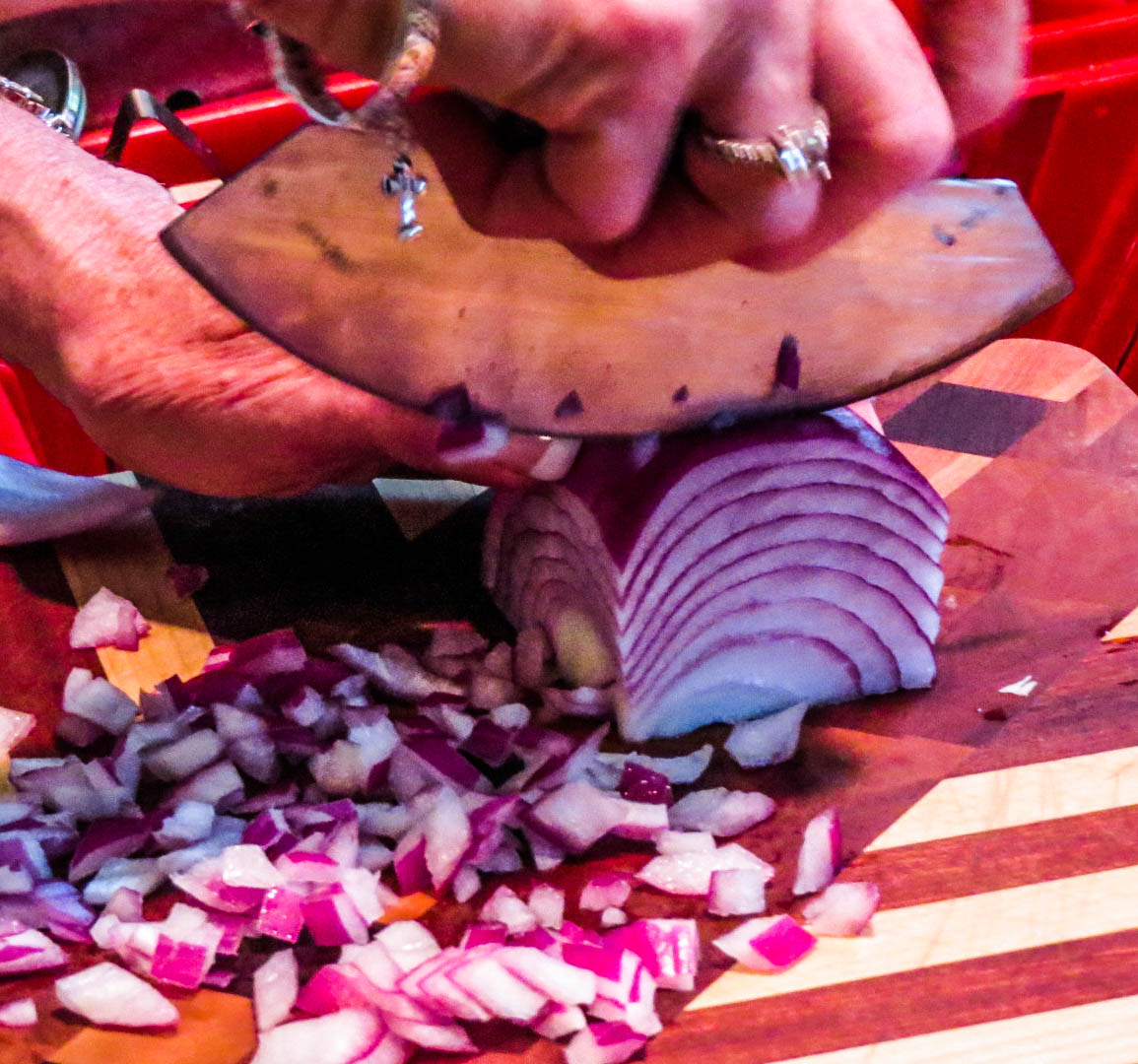
Ulu Knife

Heat a small Dutch oven over medium-high heat. Coat pan with cooking spray. Add venison; cook 3 minutes or until browned, stirring to crumble. Remove from pan with a slotted spoon. Cover and keep warm.

Reduce heat to medium. Use your Ulu knife to chop onion, bell pepper, garlic and to cut your venison into small pieces. Add onion, bell pepper, garlic, and jalapeño to pan; cook 10 minutes or until tender, stirring frequently. Stir in chili powder and next 4 ingredients (through black pepper).  Add meat and onions. Add venison, diced tomatoes, chicken broth, and tomato paste, stirring until well combined; bring to a boil. Cover; reduce heat.
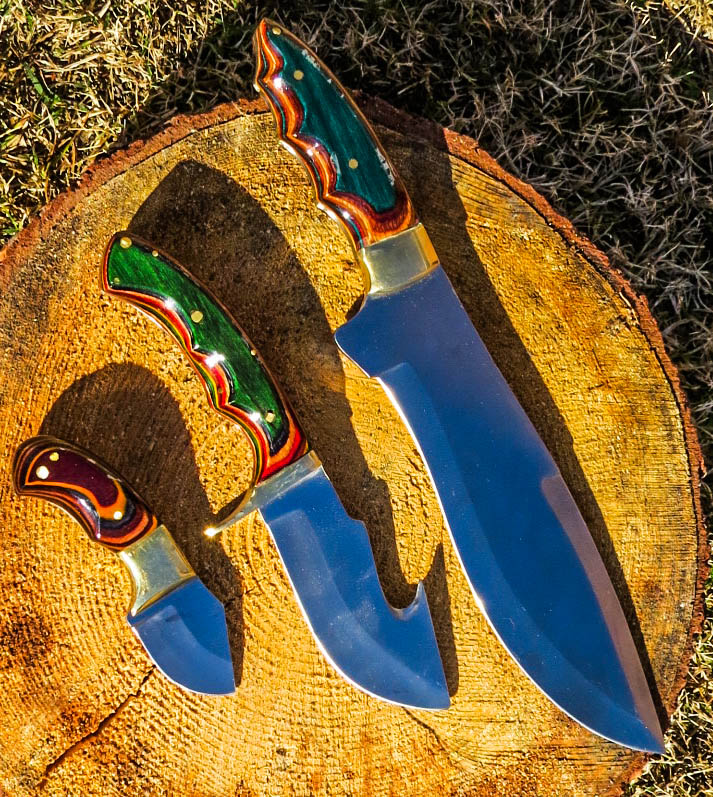
What Type of Knives Do Hunters Use?

How Do You Choose a Hunting Knife? A hunting knife is a knife used during hunting for preparing the game toIMG_1164 be used as food: skinning the animal and cutting up the meat. It is different from the Hunting dagger which was traditionally used to kill wild game.  Hunting knives are traditionally designed for cutting rather than stabbing, and usually have a single sharpened edge. The blade is slightly curved on most models, and some hunting knives may have a blade that has both a curved portion for skinning, and a straight portion for cutting ScreenHunter_212 Dec. 15 13.21slices of meat. Some blades incorporate a guthook. Most hunting knives designed as “Skinners” have a rounded point as to not damage the skin as it is being removed.

A quality huntin­g knife is versatile enough to do everything the average hunter needs — from skinning the animal to splitting through its ribcage and bone. When you’re choosing a hunting knife, it’s important to consider how you’ll use it and the type of game y­ou plan to hunt. Clearly, the big game hunter will use a different type of knife than someone who hunts rabbits. And, if you think bigger is always better, you’d be wrong. An oversized knife will make cleaning small game harder, not easier, and increase your chances of cutting yourself.  Read more about Gonzo’s hunting knives by clicking here.

Chefs Love Their Knives!

ScreenHunter_207 Dec. 12 13.27Most chefs treasure their knives! Ulu knives are perfect for slicing, dicing, chopping, and cutting.  The knife is unique because the handle is placed directly over the curved, extremely sharp, steel blade. This gives the user much better control, and greatly increases the force one can use to cut, or chop large, or hard to cut items. It is tough to cut meat and sharp enough to slice a tomato. Read more about Ulu Knives – just click here!

IMG_1123IMG_9064IMG_8986IMG_8072


What Is the Oyster R-Month Rule?

Don’t worry, you can now eat oysters all year long.An employee of the Hollywood Oyster company in Maryland pulls oysters out of the water.

Kit Waskom Pollard, a writer for The Baltimore Sun, gathered information on this topic. One of the more well-known, but less understood, rules about oysters says that they should be eaten only during months that have an “R,” so from May to August, they should be off the menu. This guideline goes back hundreds of years and is rooted in lack of reliable refrigeration and a need to allow oysters to reproduce during the summer months. When oysters reproduce, they become weak and may be susceptible to disease.
                                                                                                                                                                       
Today, thanks to modern refrigeration and the development of new breeds of oysters that do not reproduce in the summer, oysters are fine to eat any time. “The thing we spend most of our time educating on is that with farmed oysters, you can eat them year-round,” says Tal Petty, who harvests the Sweet Baby Jesus oyster at his St. Mary’s County farm, Hollywood Oyster.

“First, they’re not sitting on a boat in the sun for hours on end,” he says. “And two, we grow triploid oysters — hybrids. They don’t have sex in the summer, which means their meat is firm throughout the season.”

The Maryland Department of Natural Resources has a campaign to get diners past the R rule: “New aquaculture technology, strict harvesting standards and modern refrigeration have debunked this myth and made our Chesapeake delicacy enjoyable year-round!”

Source: June 10, 2014|By Kit Waskom Pollard, For The Baltimore Sun

Create Great Gifts By Recycling Your Shells!

IMG_8890ScreenHunter_185 Dec. 01 08.20Do You Recycle? Recycling is the process of collecting and processing materials that would otherwise be thrown away as trash and turning them into new products.

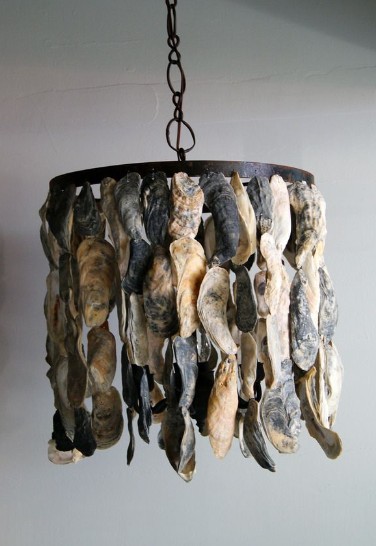
So, what can you do with your leftover oyster shells? You will be surprised. Here are some ideas to help you get started. First shuck your oysters, then bleach your shells. Once they are clean and dry, let your creative side shine!